


Running a startup is exciting until HR starts eating up your time. One day you’re building your product, the next you’re buried in attendance sheets, payroll calculations, and messy spreadsheets that somehow never match. And let’s be honest, most startups don’t have a full HR team, so managing people can quickly turn into controlled chaos.
In this blog, we’ll explore hr software for startups in Nepal and how it can simplify your HR operations without slowing you down. We’ll cover key features, benefits, and practical tips to help you choose the right HRMS for your startup. Whether you’re just starting or scaling fast, this guide will help you manage your team more efficiently, without the usual headaches.
In this blog
What Is HR Software for Startups?
HR software for startups is a digital tool designed to manage employee data, automate HR tasks, and streamline workforce operations. It helps startups handle essential functions like attendance, payroll, recruitment, and performance tracking in one system. Instead of relying on manual processes, everything is organized and automated through HR software. This saves time, reduces errors, and allows startups to focus more on growth and core business activities.
Why Startups in Nepal Need HR Software in 2026?
Startups in Nepal need HR software in 2026 to manage growing teams efficiently, automate routine tasks, and reduce operational errors. As startups scale, manual HR processes become difficult to handle and can slow down progress. The benefits of using HR software include streamlined employee management, payroll, and compliance in one system. It allows founders and teams to focus more on growth rather than administrative work.
1. Managing Small but Growing Teams Efficiently
Startups often begin with small teams, but they grow quickly. Managing employees manually becomes challenging as the team expands. HR software helps organize employee data, track roles, and manage workloads effectively. It ensures that everyone is aligned and tasks are distributed properly. This improves team coordination and overall efficiency. It also supports smoother team scaling without operational confusion.
2. Automating HR Tasks with Limited Resources
Most startups don’t have a dedicated HR department, which makes handling HR tasks time-consuming. HR software automates processes like attendance tracking, payroll, and leave management. This reduces manual effort and saves valuable time. It allows small teams to manage HR without additional staff. Automation makes operations smoother and more efficient. It also reduces dependency on manual processes.
3. Ensuring Compliance with Nepal Labor Laws
Compliance with labor laws is essential, even for startups. HR software helps maintain accurate records, manage employee policies, and ensure proper documentation. This reduces the risk of legal issues and penalties. It also simplifies reporting and audits. Staying compliant becomes easier with a structured system. It also helps startups stay prepared for inspections or audits.
4. Improving Payroll Accuracy and Salary Processing
Payroll errors can create dissatisfaction among employees and affect trust. HR software automates salary calculations, deductions, and payments. This ensures employees are paid accurately and on time. It also reduces the chances of manual errors. Accurate payroll management improves employee confidence and satisfaction. It also saves time during monthly salary processing.
5. Enhancing Productivity in Fast-Paced Startup Environments
Startups operate in fast-moving environments where efficiency is critical. HR software reduces administrative workload and allows teams to focus on important tasks. Managers can track performance and make better decisions using real-time data. This leads to improved productivity across the organization. It creates a more organized and effective work culture. It also helps startups maintain speed without losing control.
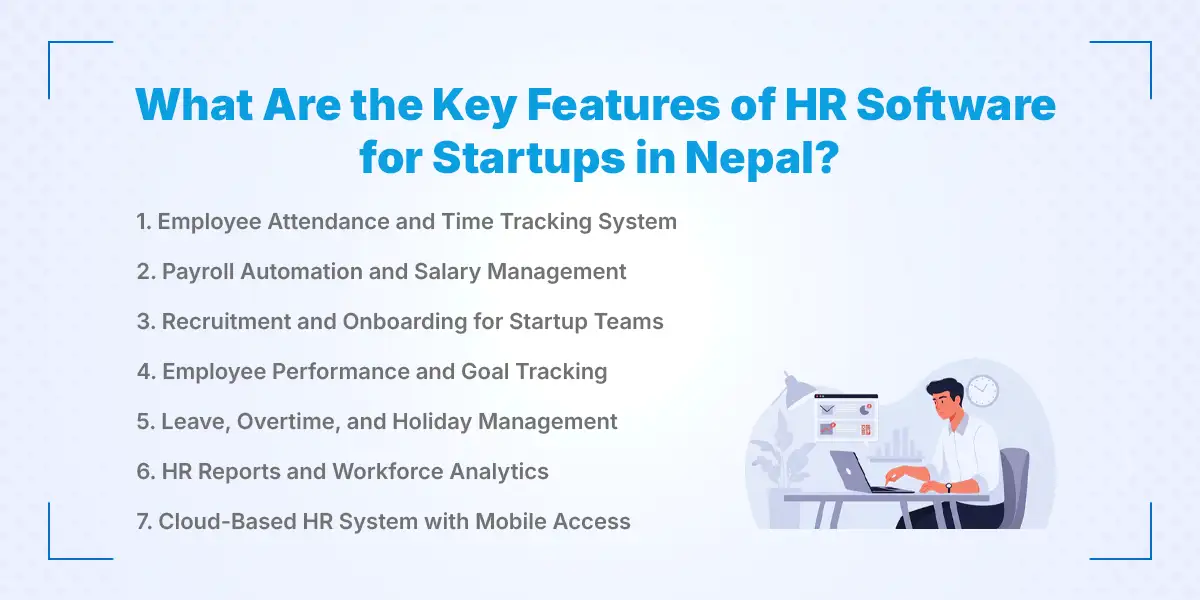
What Are the Key Features of HR Software for Startups in Nepal?
HR software for startups in Nepal includes essential features that help automate HR tasks, manage employees, and support business growth efficiently. These features of HR system are designed to simplify operations for small teams while preparing startups for scaling. Instead of juggling multiple tools, everything is managed in one system. This improves accuracy, saves time, and keeps operations organized.
1. Employee Attendance and Time Tracking System
Startups need a simple yet reliable way to track employee attendance and working hours. HR software provides real-time tracking, helping managers monitor productivity and work patterns. It eliminates manual entries and reduces errors. This ensures accurate records for payroll and performance evaluation. It also helps teams stay accountable and organized. It gives better visibility into how time is actually spent.
2. Payroll Automation and Salary Management
Payroll processing can be time-consuming and error-prone if done manually. HR software automates salary calculations, deductions, and payments. This ensures employees are paid accurately and on time. It also simplifies tax calculations and compliance. Automated payroll builds trust and reduces administrative burden. It also ensures consistency in every pay cycle.
3. Recruitment and Onboarding for Startup Teams
Hiring in startups needs to be quick and efficient. HR software helps manage job applications, track candidates, and streamline hiring processes. Once selected, onboarding becomes structured with digital documentation. This ensures new employees can start smoothly. A better onboarding experience improves retention. It also creates a professional first impression for new hires.
4. Employee Performance and Goal Tracking
Tracking employee performance is crucial for startup growth. HR software allows managers to set goals, monitor progress, and evaluate performance. It helps identify top performers and areas for improvement. This supports better decision-making and team development. It also aligns employees with company goals. Continuous tracking helps maintain consistent performance standards.
5. Leave, Overtime, and Holiday Management
Managing leave and overtime manually can lead to confusion and conflicts. HR software allows employees to request leave and managers to approve it easily. It tracks overtime and holidays accurately. This ensures fair and transparent policies. It also helps maintain a proper work-life balance. It prevents scheduling conflicts within teams.
6. HR Reports and Workforce Analytics
Data is powerful for startups, and HR software provides valuable insights through reports and analytics. Managers can track attendance, performance, and workforce trends. These insights help in making better business decisions. It also helps identify inefficiencies. Data-driven management improves overall performance. It also supports strategic planning for growth.
7. Cloud-Based HR System with Mobile Access
Cloud-based HR systems allow startups to access data anytime, anywhere. This is especially useful for remote or hybrid teams. Mobile access makes it easy for employees and managers to stay connected. It also ensures data security with regular backups. This flexibility supports modern startup work environments. It also enables faster decision-making on the go.
Benefits of Using HR Software for Startups in Nepal
Using HR software for startups in Nepal helps streamline operations, reduce manual workload, and improve overall efficiency. Startups often operate with limited resources, so automating HR tasks can save valuable time and effort. It also ensures accuracy in critical processes like payroll and attendance. Exploring different types of HR software allows startups to choose solutions that best fit their needs. Overall, it allows startups to focus more on growth rather than administrative work.
1. Saves Time by Automating HR Processes
Startups usually don’t have large HR teams, so handling tasks manually can be time-consuming. HR software automates processes like attendance tracking, payroll, and leave management. This reduces repetitive work and frees up time for more important activities. It allows teams to focus on business growth instead of admin tasks. Automation makes daily operations faster and smoother. It also helps maintain consistency in HR processes.
2. Reduces Errors in Payroll and Attendance
Manual calculations often lead to mistakes in payroll and attendance records. HR software ensures accurate tracking and automated calculations. This reduces errors in salaries, deductions, and working hours. It also improves transparency within the team. Fewer errors mean fewer conflicts and smoother operations. It also builds trust among employees.
3. Improves Employee Data Management
Managing employee records manually can become messy as the team grows. HR software stores all employee data in a centralized system. This makes it easy to access, update, and manage information. It also improves organization and reduces data loss. Structured data helps maintain clarity and efficiency. It also ensures quick access to important information when needed.
4. Supports Better Decision-Making with Data
HR software provides valuable insights through reports and analytics. Managers can track employee performance, attendance, and productivity. This data helps in making informed decisions. It also helps identify areas that need improvement. Data-driven decisions lead to better outcomes. It also supports strategic planning and growth.
5. Helps Scale HR Operations as Startup Grows
As startups grow, managing HR manually becomes increasingly difficult. HR software provides scalable solutions that grow with the business. It can handle more employees and complex operations without issues. This avoids the need to switch systems later. Scalable HR tools support long-term growth and stability. It also prepares startups for future expansion.
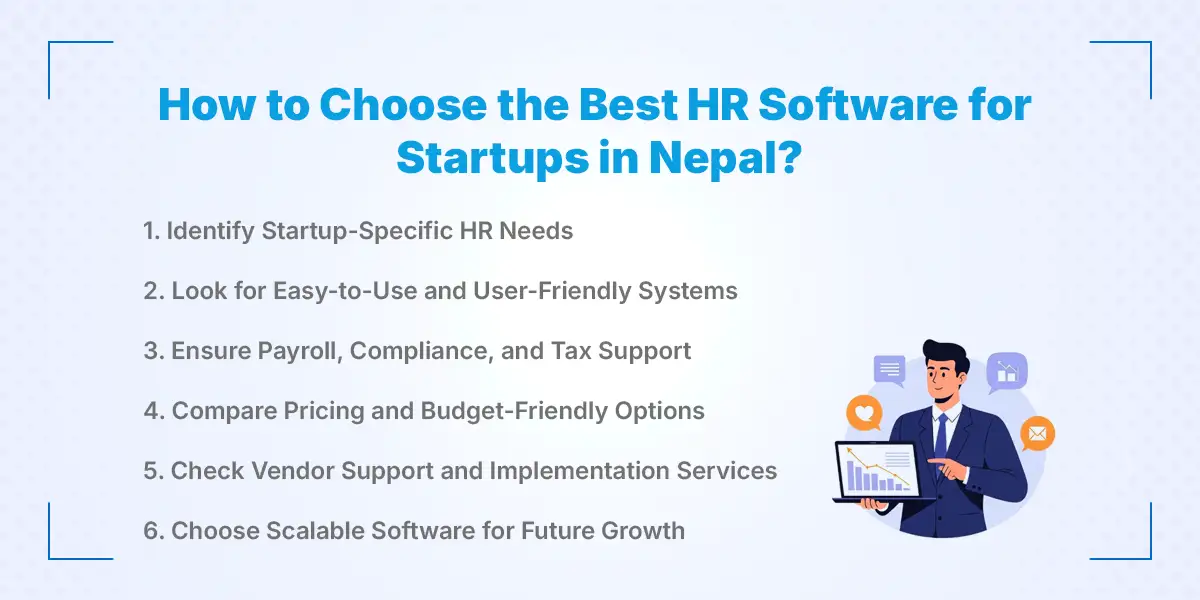
How to Choose the Best HR Software for Startups in Nepal?
To choose the best HR software for startups in Nepal, you need to select a solution that fits your current needs while supporting future growth. The right software should simplify HR tasks like payroll, attendance, and compliance without being complicated to use. Startups should focus on usability, affordability, and scalability. A well-chosen system can save time, reduce errors, and improve overall efficiency.
1. Identify Startup-Specific HR Needs
Every startup is different, so the first step is understanding what your business actually needs. Consider team size, hiring plans, and HR processes you want to automate. This helps you avoid paying for unnecessary features. A clear understanding of needs makes decision-making easier. It ensures you choose the right tool from the start. It also helps align the software with your business goals.
2. Look for Easy-to-Use and User-Friendly Systems
Startups need software that is simple and quick to use without extensive training. A user-friendly interface helps employees and managers adopt the system easily. Complicated tools can slow down operations instead of improving them. Ease of use improves efficiency and saves time. It also ensures better team adoption. A simple system increases overall productivity.
3. Ensure Payroll, Compliance, and Tax Support
Payroll and compliance are critical for startups to operate smoothly. The software should handle salary calculations, taxes, and legal requirements accurately. This reduces the risk of errors and penalties. It also simplifies reporting and documentation. Proper support ensures hassle-free HR management. It also keeps your business legally secure.
4. Compare Pricing and Budget-Friendly Options
Startups often work with limited budgets, so cost is an important factor. Compare different software options and choose one that offers good value for money. Avoid overpaying for features you don’t need. Look for flexible pricing plans. A budget-friendly solution ensures long-term sustainability. It also helps manage expenses effectively.
5. Check Vendor Support and Implementation Services
Reliable support from the software provider is essential, especially during the initial setup. Check if the vendor offers training, onboarding, and technical assistance. Good support ensures smooth implementation and quick problem resolution. It also helps you make the most of the software. Strong vendor support improves overall experience. It also reduces downtime during operations.
6. Choose Scalable Software for Future Growth
Startups grow quickly, so your HR software should be able to grow with you. A scalable system can handle more employees and complex operations over time. This avoids the need to switch systems later. It also supports long-term business expansion. Choosing scalable software is a smart long-term investment. It ensures your system evolves with your startup.
What Makes HR Software for Startups Different from Other Businesses?
HR software for startups is different because it is designed to be simple, flexible, and cost-effective while supporting rapid growth. Unlike large enterprises, startups need lightweight systems that can handle multiple HR tasks without complexity. The focus is on automation, ease of use, and scalability. It must adapt quickly as the business evolves and team size increases.
1. Need for Cost-Effective and Flexible Solutions
Startups operate on tight budgets, so they need HR software that delivers value without high costs. The system should offer essential features without unnecessary extras. Flexibility is also important, as startups may change processes frequently. A cost-effective solution ensures sustainability. It also allows startups to invest resources in growth areas. It helps maximize ROI from limited budgets.
2. Managing Rapidly Growing Teams
Startup teams can grow quickly, sometimes within a short period. HR software helps manage this growth by organizing employee data and workflows efficiently. It ensures that onboarding and management processes remain smooth. This prevents chaos as the team expands. It also supports better team coordination. It helps maintain structure even during rapid scaling.
3. Limited HR Resources and Small Teams
Most startups don’t have dedicated HR departments, so responsibilities are shared among team members. HR software automates key tasks, reducing the need for manual effort. This allows small teams to manage HR functions effectively. It simplifies operations without requiring additional staff. It also reduces workload pressure. It enables teams to operate efficiently with fewer resources.
4. High Focus on Automation and Efficiency
Efficiency is critical in startups where time and resources are limited. HR software automates repetitive tasks like payroll, attendance, and reporting. This reduces errors and speeds up operations. It allows teams to focus on strategic work. Automation plays a key role in scaling efficiently. It also improves overall operational speed.
Which is the Best HR Software for Startups in Nepal?
Kumari Job HRMS and Pace HRMS are the best HR software for startups in Nepal because they offer all-in-one platforms that automate payroll, attendance, recruitment, and employee management in a simple, scalable way. They are specifically designed to meet the needs of Nepali businesses, ensuring local compliance and smooth HR operations.
Both Kumari Job and Pace HRMS provide a centralized system where startups can manage their entire workforce without relying on multiple tools. With features like performance tracking, employee self-service, and cloud-based access, they support both efficiency and growth. This combination of affordability, automation, and scalability makes it an ideal choice for startups looking to streamline their HR processes.
Common Challenges Startups Face Without HR Software
Without HR software, startups often struggle to manage their workforce efficiently as they grow. Manual processes can quickly become overwhelming and time-consuming, especially with limited resources. Errors in payroll, attendance, and compliance are more likely to occur. Over time, these challenges can slow down operations and affect overall productivity.
1. Manual HR Tasks and Time Wastage
Startups often rely on spreadsheets and manual methods to manage HR tasks. This takes up a lot of time and increases the chances of errors. Repetitive work like tracking attendance and managing records becomes inefficient. It also distracts teams from focusing on core business activities. Over time, this leads to reduced productivity.
2. Payroll Errors and Compliance Issues
Handling payroll manually can result in incorrect salary calculations and missed deductions. This can create dissatisfaction among employees. Compliance with labor laws can also become difficult without proper systems. Mistakes may lead to penalties or legal issues. Accurate payroll and compliance are hard to maintain manually.
3. Difficulty Managing Growing Teams
As startups grow, managing employee data and workflows becomes more complex. Without a proper system, it’s difficult to track roles, responsibilities, and performance. This can lead to confusion and miscommunication. It also affects team coordination and efficiency. Growth becomes harder to manage without structure.
4. Lack of Real-Time HR Insights
Without HR software, startups don’t have access to real-time data and analytics. Decisions are often made based on incomplete or outdated information. This limits the ability to improve performance and identify issues. It also affects strategic planning. Lack of insights slows down business growth.
Future of HR Software for Startups in Nepal
The future of HR software for startups in Nepal is moving toward smarter, faster, and more integrated solutions. As startups grow and adopt digital tools, HR systems are becoming more automated and data-driven. Modern HR software is no longer just about managing employees; it’s about improving decision-making and efficiency. With advancements in AI and cloud technology, startups can expect more flexible and intelligent HR solutions.
1. AI and Automation in Startup HR Management
AI and automation are transforming how startups manage HR tasks. Routine processes like attendance, payroll, and recruitment can now be handled automatically. This reduces manual effort and minimizes errors. AI can also provide insights into employee performance and productivity. It helps startups make smarter decisions. Over time, automation will become a core part of HR operations.
2. Mobile-First HR Systems for Startup Teams
With the rise of remote and hybrid work, mobile-first HR systems are becoming essential. Employees and managers can access HR tools directly from their smartphones. This makes it easier to track attendance, apply for leave, and manage tasks on the go. It improves accessibility and communication. Mobile systems support flexible work environments. They also enhance user experience and engagement.
3. Integration with Business and Productivity Tools
Modern HR software is increasingly integrating with other business tools like project management and accounting systems. This creates a seamless workflow across different departments. It reduces the need to switch between multiple platforms. Integration improves efficiency and data accuracy. It also helps startups operate more smoothly. Connected systems support better overall business management.
Conclusion
Managing HR in a startup might seem manageable at first, but as your team grows, things can quickly become complicated. The right HR Software for Startups in Nepal helps bring structure, accuracy, and efficiency to your operations. From automating payroll and attendance to improving employee management, it reduces manual work and allows your team to focus on what really matters: growth.
Choosing the right HR software is not just about solving current problems, but preparing for the future. Look for a solution that is simple, scalable, and aligned with your business needs. With the right system in place, startups can operate more smoothly, make better decisions, and build a strong foundation for long-term success.
Frequently Asked Questions
Submit your comments

Get Our App On



How to Register a Personal PAN Card in Nepal: Online & Offline Methods
VIEW DETAILS
What Is the Average JavaScript Developer Salary in Nepal?
VIEW DETAILS
Salary Tax Slab 2083/84 in Nepal: Latest Tax Rates & Calculation
VIEW DETAILS
What Is the Average Java Developer Salary in Nepal?
VIEW DETAILS


Loading Comments...