


Basketball is rapidly securing its position as one of the most popular sports among urban youth in Nepal. Schools, colleges, and private academies across major cities like Kathmandu, Lalitpur, and Pokhara are actively investing in court infrastructure and coaching staff. Despite this surge in popularity, the financial infrastructure supporting professional and semi-professional athletes remains in a transitional phase. Unlike football or cricket, where centralized contract systems are firmly established, basketball operates on a mix of institutional employment and short-term tournament contracts.
The current earning potential for domestic basketball players depends heavily on their affiliation with government departmental teams or independent private clubs. Departmental organizations provide stable, year-round corporate infrastructure, whereas private clubs primarily fund players during active league cycles. Several key elements dictate an individual's compensation framework, including their selection to the national team squad, their performance statistics, and the overall financial backing of their club. Understanding these underlying economic variables is critical for any athlete intending to navigate the domestic sports industry sustainably.
In this blog
How Much Is the Average Basketball Player Salary in Nepal?
The average basketball player salary in Nepal ranges between NPR 15,000 and NPR 60,000 per month, depending largely on whether a player is signed to a private club or a government departmental team. Departmental athletes receive steady year-round government salaries, whereas private club players generally earn income only during active league months. Additional income from match fees, team bonuses, and local tournament prizes heavily influences these baseline figures.
1. Salary of National Team Basketball Players
National team basketball players in Nepal do not have permanent monthly contracts from the central association but receive daily stipends during active closed camps and international tours. These camp allowances usually range from NPR 500 to NPR 1,500 per day, which supplements their primary income from domestic clubs. To secure financial stability, almost all national players seek full-time employment with departmental teams or top-tier private clubs. Developing a consistent spot on the international roster directly increases visibility, helping athletes command better terms during domestic league negotiations.
2. Salary of Club-Level Basketball Players
Club-level basketball players signed to prominent teams in the Nepal Basketball League earn between NPR 25,000 and NPR 50,000 per month during the active season. These private contracts are usually short-term, lasting only for the duration of the tournament or league cycle. Clubs like Golden Gate International Club and Royal Basketball Club provide these seasonal payments based on player reputation and past performance. Athletes must actively perform during these brief windows to secure contract renewals or attract better offers for the following season.
3. Salary of Emerging and Youth Basketball Players
Emerging and youth basketball players in Nepal typically earn between NPR 10,000 and NPR 20,000 per month if they secure a developmental roster spot. Many youth players receive non-monetary benefits such as college scholarships, free training equipment, and covered travel expenses instead of high cash salaries. These entry-level arrangements serve as the primary proving ground where young athletes showcase their skills to senior scouts. Maximizing court time during junior tournaments allows these players to transition into full professional contracts within a few seasons.
4. Match Fees, Bonuses, and Allowances
Match fees and winning bonuses provide critical financial cushions, often adding NPR 2,000 to NPR 10,000 per game to a player's baseline earnings. Corporate sponsors and club management distribute these performance-based incentives immediately after significant tournament victories. Daily travel and food allowances protect players from out-of-pocket expenses when competing outside their home districts. Tracking and negotiating these variable incentives ensures that active players maximize their take-home pay during peak competitive months.
Factors That Affect Basketball Player Salary in Nepal
- .Playing Experience and Achievements: Players with more experience and tournament victories usually earn higher salaries.
- National Team Selection: Representing Nepal at the national level increases a player's value and earning potential.
- Club Reputation and Financial Strength: Well-funded clubs and corporate teams generally offer better salaries and benefits.
- Player Position and Performance: Players who consistently perform well and play key positions often receive higher pay.
- Sponsorship and Endorsements: Popular players can earn extra income through brand partnerships and sponsorship deals
Basketball Player Salary in Nepal by Competition Level
Basketball player earnings in Nepal vary widely depending on the competition level, ranging from scholarships at the university level to monthly salaries in professional leagues. While grassroots tournaments offer modest match fees, top-tier leagues and international events provide significantly higher financial rewards and incentives. Overall income is often a mix of allowances, sponsorships, and performance-based payments rather than fixed long-term salaries.
| Competition Level | Salary Range (NPR / Month) | Income Structure | Duration |
|---|---|---|---|
| University & College Basketball | Tuition Fee Waivers (Full or Partial Scholarships) | Academic Scholarships & Support | Academic Year |
| Regional & District Tournaments | NPR 3,000 – 5,000 per Game | Daily Allowance / Prize Pools | Tournament Basis |
| International Events | Government Cash Awards & Incentives | Fixed Medal Performance Bonuses | Per Event |
| Professional Leagues | NPR 25,000 – 60,000 | Monthly Retainer / Match Fees | 2–3 Months |
1. Professional Basketball Leagues
Top-tier domestic leagues offer the highest financial rewards, with senior players earning up to NPR 60,000 per month during active competition. These premier tournaments attract corporate sponsorships, allowing clubs to budget for competitive monthly player salaries. The short duration of these leagues means players must secure alternative income streams once the tournament wraps up. Performing well on this stage remains the most effective path to landing lucrative short-term professional deals.
2. University and College Basketball Competitions
Collegiate tournaments rarely provide direct cash salaries, focusing instead on full or partial academic tuition waivers. Institutions like Golden Gate and Times International College recruit top athletes by covering their educational fees and hostel costs. This setup allows student-athletes to continue their athletic development without facing immediate financial burdens. Excellence in college leagues frequently leads to direct scouting opportunities by major division clubs.
3. Regional and District Basketball Tournaments
District tournaments operate primarily on a match-fee or prize-money model rather than fixed monthly retainer contracts. Teams in these local events often pay guest players between NPR 3,000 and NPR 5,000 per appearance. Winning the championship trophy brings a cash purse that is divided directly among the roster members. These regional events help grassroots players maintain competitive fitness while earning supplementary cash throughout the year.
4. International Basketball Events
Representing Nepal in international tournaments like the SABA Championship or South Asian Games brings official government cash awards for medal victories. The National Sports Council provides fixed cash bonuses to athletes who secure podium finishes on foreign soil. These international appearances provide massive exposure that elevates a player's domestic commercial appeal. Athletes leverage this global experience to secure higher-paying contracts with corporate sponsors back home.
Sources of Income for Basketball Players in Nepal
Basketball players in Nepal earn income from multiple sources, including club salaries, match fees, tournament prize money, and daily allowances. Many players also generate additional earnings through sponsorships, endorsements, coaching, basketball camps, and sports-related jobs.
1. Monthly Club Salary
Fixed monthly salaries from clubs form the financial foundation for top players during the active league season. These payments ensure that athletes can focus entirely on training and tactical execution without worrying about daily expenses. Departmental teams extend this stability year-round by employing players within their organizational frameworks. Securing a reliable monthly salary remains the primary objective for every serious athlete entering the domestic circuit.
2. Tournament Prize Money
Cash prizes from knock-out tournaments offer substantial financial windfalls that supplement low baseline club salaries. Winning a major domestic championship can bring a team purse of several lakh rupees, which is split among the squad. This performance-based income incentivizes squads to maintain high competitive standards throughout the playing calendar. Relying on prize money requires consistent success, making it an unpredictable but lucrative revenue source.
3. Sponsorship Deals
Corporate sponsorships provide funding directly to individual athletes or entire club rosters. These deals often include branded apparel, footwear, and nutritional supplements that offset training costs. Companies look for influential players who can represent their corporate values on a national stage. Establishing a professional partnership with a corporate entity stabilizes an athlete's career during the off-season.
4. Brand Endorsements
Brand endorsements allow elite basketball stars to monetize their public image through advertising campaigns. Local sportswear companies and fitness brands pay prominent athletes for commercial appearances and promotional shoots. These lucrative contracts are generally reserved for national team captains or exceptionally popular league icons. Maximizing endorsement revenue requires maintaining a clean public image and high visibility in mainstream media.
5. Coaching and Training Programs
Leading youth coaching clinics and school training programs offers a reliable secondary income stream for veteran players. Private schools in Kathmandu frequently hire active or retired basketball players as head coaches for their sports programs. These coaching positions provide steady monthly salaries that run independently of the tournament calendar. Transitioning into training roles allows athletes to sustain their livelihoods while mentoring the next generation of talent.
6. Social Media and Personal Branding
Creating digital content and building a personal brand allows modern players to generate advertising revenue online. Local businesses pay athletes to create sponsored posts, reels, and product reviews on platforms like Instagram. A strong online presence increases an athlete's marketability, making them highly attractive to corporate scouts. Players must consistently engage their followers to turn digital metrics into tangible monthly financial compensation.
What Factors Help Basketball Players Earn Higher Salaries in Nepal?
Basketball players in Nepal earn higher salaries by maintaining consistent on-court performance, securing national team spots, and building an active personal brand. Developing specialized skills like elite perimeter shooting or shot-blocking increases a player's leverage during club negotiations. Furthermore, cultivating a strong digital footprint makes athletes highly attractive to corporate sponsors looking for brand ambassadors.
Consistent performance and awards: Winning tournament honors instantly strengthens a player's salary position during contract negotiations.
Professional training and skill development: Investing in private conditioning and tactical training makes an athlete indispensable to top clubs.
Strong personal brand and online presence: Maintaining an engaging social media profile attracts lucrative corporate promotional deals.
Participation in international competitions: Competing against foreign teams elevates a player's tactical reputation, commanding premium domestic contract fees.
Basketball Clubs and Organizations That Employ Players in Nepal
Major basketball clubs: Private entities like Golden Gate International Club, Royal Basketball Club, and Kirtipur Basketball Club actively sign top talent for seasonal league campaigns.
Corporate and institutional teams: Departmental giants like the Tribhuvan Army Club, Nepal Police Club, and Armed Police Force (APF) provide permanent, year-round employment contracts.
Basketball associations and development programs: The Nepal Basketball Association (NeBA) and regional district committees fund youth training camps and grassroots selection tournaments.
Career Path to Become a Professional Basketball Player in Nepal
Aspiring basketball players in Nepal typically begin by participating in school, college, and local club competitions to develop their skills and gain competitive experience. Regular training, physical fitness, and strong performances in regional tournaments help players attract attention from coaches and scouts.
As players progress, they can join professional clubs, compete in national-level leagues, and aim for selection to the Nepal national team. Consistent performance, networking within the basketball community, and participation in major tournaments can open opportunities for professional contracts, sponsorships, and long-term basketball careers.

1. Joining Basketball Academies
Enrolling in local basketball academies gives young athletes access to structured training regimens and professional coaching. These specialized facilities focus on foundational mechanics, tactical awareness, and physical conditioning from an early age. Regular academy tournaments provide players with their first taste of organized, competitive basketball matches. Developing skills in a structured academy setting helps players catch the eye of high school and college scouts.
2. Competing in School and College Tournaments
Playing in inter-school and collegiate championships offers crucial competitive exposure on the domestic sports circuit. Scouts from top-tier clubs frequently attend these high-profile educational tournaments to identify raw athletic talent. Dominating the school circuit often leads to full athletic scholarships at prestigious colleges in Kathmandu. These academic tournaments act as a vital bridge connecting grassroots youth players to senior club opportunities.
3. Getting Selected by Clubs
Securing a spot on a senior club roster requires passing rigorous open tryouts and performing well in district tournaments. Club managers look for disciplined team players who can immediately contribute to their tactical systems. Initial contracts may offer modest stipends, but they provide the essential platform needed to prove professional readiness. Consistent contributions on the club court lead to improved financial terms and longer contract commitments.
4. Reaching the National Team Level
Earning a selection to the Nepal national basketball team represents the pinnacle of an athlete's domestic playing career. The national selection committee picks the top performers from the Nepal Basketball League for international camp rosters. Wearing the national colors instantly maximizes a player's domestic marketability and long-term earning potential. This elite status allows players to secure the highest-paying club contracts and premium corporate endorsements available.
Challenges Affecting Basketball Player Salary in Nepal
- Limited professional league structure: The absence of a year-round premier league prevents players from earning steady, predictable monthly incomes.
- Sponsorship constraints: Most corporate advertising budgets favor cricket and football, leaving basketball clubs with limited financial resources.
- Seasonal competition schedules: Tournaments are highly packed into specific months, causing long periods of financial inactivity during the off-season.
- Lack of long-term player contracts: Most clubs offer deals that only cover a single tournament, leaving players without health insurance or job security.
Why Is Basketball Player Salary in Nepal Increasing?
Basketball player salaries in Nepal are increasing due to growing corporate sponsorships, rising youth popularity, and the commercialization of domestic tournaments like the Nepal Basketball League. Private enterprises are starting to see the marketing value in domestic basketball, leading to larger tournament prize pools and better player incentives. This influx of capital allows clubs to offer more competitive seasonal contracts to retain elite athletic talent.
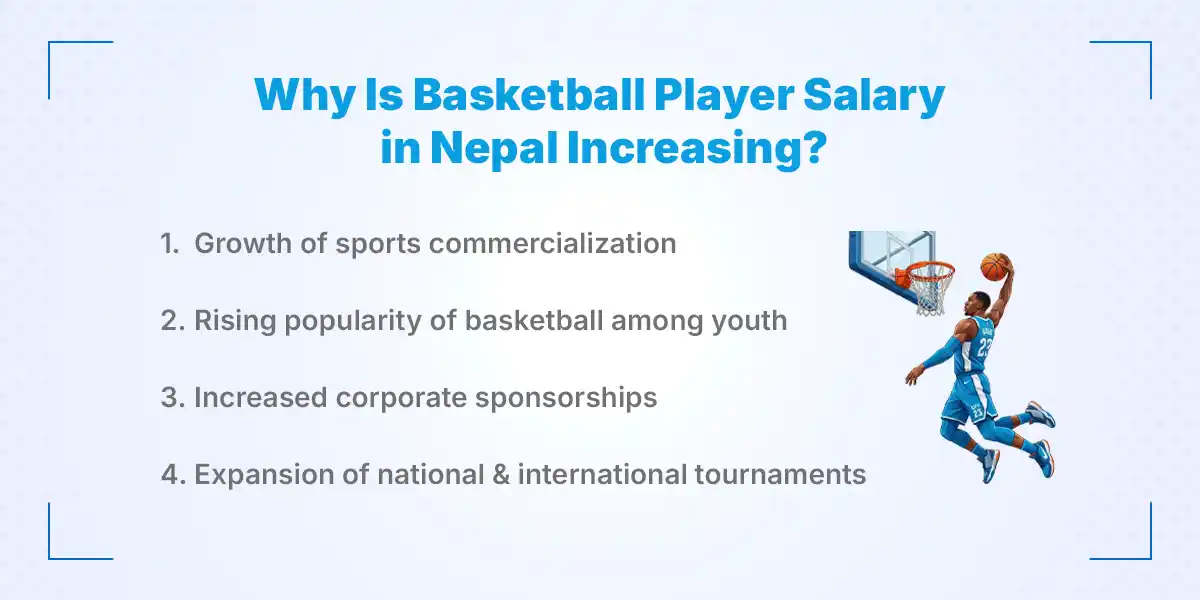
- Growth of sports commercialization: Modern marketing strategies are turning local basketball tournaments into profitable entertainment properties.
- Rising popularity of basketball among youth: A surging base of young players has increased spectator turnout and media viewership.
- Increased corporate sponsorships: National beverage brands and financial institutions are injecting substantial capital into club budgets.
- Expansion of national and international tournaments: The rise in organized fixtures provides players with regular opportunities to earn match fees.
Future of Basketball Careers and Salaries in Nepal
- Emerging opportunities for professional athletes: The landscape is shifting toward more organized models that promise sustainable income channels.
- Growth of basketball academies: New private training facilities are creating employment pathways for both young players and transitioning coaches.
- Potential impact of private leagues: Upcoming franchise-style tournaments aim to introduce player auctions, matching the financial success of domestic cricket.
- International exposure and overseas opportunities: Exceptional players are beginning to attract attention from regional South Asian and Asian club league
Conclusion
Building a profitable basketball career in Nepal requires treating the sport as an entrepreneurial pursuit where on-court performance acts as a launching pad for personal branding, coaching, and corporate partnerships. Relying solely on short-term tournament contracts is rarely sustainable, meaning athletes must actively diversify their revenue streams and treat their athletic skills as a marketable business asset. True career sustainability emerges when you combine athletic training with proactive professional networking and digital visibility.
Whether you are an aspiring athlete looking for club tryouts or a professional looking to transition into sports management and coaching roles, finding the right job market openings is vital. Explore the latest sports, fitness, and institutional job vacancies across the country by visiting KumariJob to secure your next career milestone.
Frequently Asked Questions
Submit your comments

Get Our App On



How to Make a Police Report (Police Clearance Certificate) in Nepal?
VIEW DETAILS
Types of SEO and How They Work: Complete Beginner's Guide
VIEW DETAILS
Government Restricts New Lok Sewa Vacancy Requests 2083/84 — Or Not?
VIEW DETAILS
How to Apply for Tattoo Artist Jobs in Nepal?
VIEW DETAILS


Loading Comments...