


Ever wondered what kind of future awaits students who choose social work as their field of study in Nepal? In a country where communities constantly need support in areas like education, public health, child welfare, and development projects, social work plays a quiet but powerful role. Bachelor of Social Work (BSW) is not just a degree, it’s often the first step toward making meaningful changes in society while building a professional career.
In this blog, we will explore the BSW scope in Nepal, including the career opportunities available after completing a BSW degree, expected salary ranges, and the types of job roles graduates can pursue. We’ll also look at the sectors where BSW graduates commonly work and the skills needed to succeed in this field. If you’re considering social work as a career path, this guide will help you understand what the journey might actually look like.
In this blog
Who Is a BSW Graduate?
BSW graduate is someone who has completed a Bachelor of Social Work (BSW) degree and is trained to support individuals, families, and communities facing social challenges. This program focuses on understanding social issues such as poverty, inequality, child protection, public health, and community development. BSW graduates learn skills like counseling, community engagement, and social research, which help them work in social service sectors. In Nepal, they often contribute to NGOs, development organizations, and community welfare programs.
BSW Scope in Nepal
The BSW scope in Nepal has been gradually expanding as the country continues to focus on social development, community welfare, and public health initiatives. With many NGOs, INGOs, and government programs working to address social challenges, trained social workers are increasingly needed across different sectors. BSW graduates play an important role in supporting communities, managing development projects, and advocating for vulnerable groups. As awareness about social welfare grows, the opportunities for social work professionals in Nepal are becoming more diverse and meaningful.
1. Growing Demand for Social Work Professionals in Nepal
The demand for social work professionals in Nepal has increased in recent years due to the growing focus on community development and social welfare programs. Organizations working in areas such as child protection, education, gender equality, and disaster management require trained individuals who understand social issues. BSW graduates bring the necessary skills to assess community needs and implement development initiatives. Their role often involves working closely with local communities and helping improve living conditions. This steady demand continues to create new opportunities in the social sector.
2. Expanding NGO and INGO Employment Opportunities
Nepal has a large number of NGOs and INGOs that actively work on social development projects across the country. These organizations focus on areas such as education, health care, poverty reduction, and human rights. BSW graduates often find employment in these organizations as social workers, project coordinators, or field officers. Working in NGOs and INGOs allows professionals to directly engage with communities and implement impactful programs. For many graduates, this sector becomes one of the most common career pathways, especially when searching for NGO INGO jobs in Nepal.
3. Government and Community Development Roles
The government of Nepal also offers various opportunities for individuals trained in social work. BSW graduates may work in community development programs, local government offices, and social welfare departments. Their responsibilities may include managing social projects, supporting vulnerable populations, and helping implement government policies at the community level. These roles allow social workers to contribute directly to national development efforts. For many graduates, working in government jobs in Nepal provides both stability and meaningful impact.
4. Increasing Focus on Social Welfare and Public Health
Nepal has placed increasing importance on social welfare and public health programs, especially in rural and underserved communities. Social workers play a key role in supporting healthcare initiatives, mental health awareness campaigns, and community education programs. BSW graduates often collaborate with healthcare workers, educators, and development agencies to address social challenges. Their work helps improve access to resources and services for marginalized groups. As social issues continue to gain attention, the demand for trained professionals in this field is likely to grow.
5. Opportunities for Higher Studies in Social Work and Related Fields
After completing a BSW degree, many students choose to pursue higher education to expand their career opportunities. Graduates can continue their studies with a Master of Social Work (MSW) or related programs in public health, sociology, or development studies. Higher education helps students develop advanced knowledge and leadership skills in social work practice. It can also open doors to research, teaching, and policy-making roles. For those interested in long-term career growth, postgraduate studies can be a valuable next step.
Career Opportunities After BSW in Nepal
BSW degree opens the door to several meaningful career opportunities in Nepal, especially in sectors focused on community welfare and social development. Graduates are trained to understand social challenges and work directly with individuals, families, and communities to address them. Many BSW graduates find employment in NGOs, INGOs, healthcare programs, and development projects. With Nepal’s growing focus on social welfare, the demand for professionals with social work skills continues to increase.
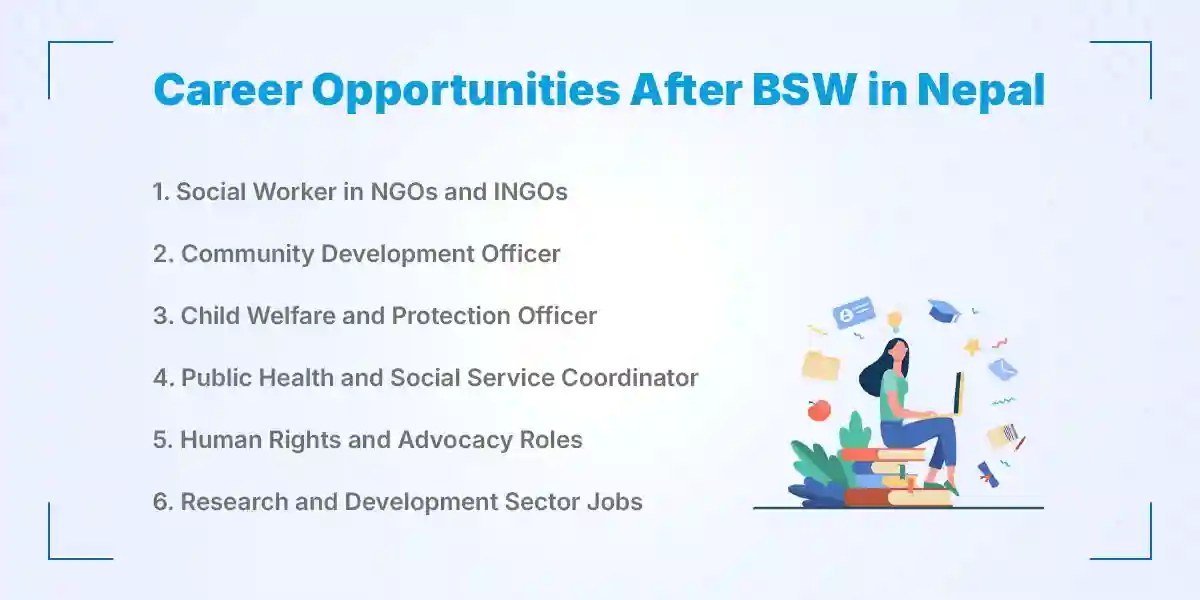
1. Social Worker in NGOs and INGOs
One of the most common career paths for BSW graduates is working as a social worker in NGOs and INGOs. In this role, professionals work directly with communities to address issues such as poverty, education, health, and gender equality. Their responsibilities often include conducting field visits, organizing community programs, and supporting development initiatives. Social workers also help connect vulnerable individuals with available services and resources. This role allows graduates to create a direct impact on community development. It also provides valuable field experience in understanding real social challenges.
2. Community Development Officer
A community development officer focuses on improving the living conditions and opportunities of local communities. These professionals often work with development organizations or local government bodies to plan and implement community-based projects. Their work may include organizing training programs, supporting local leadership initiatives, and promoting social awareness campaigns. BSW graduates in this role help communities become more self-sufficient and resilient. It’s a career that combines leadership, social understanding, and practical problem-solving. The role also encourages long-term community empowerment and sustainable development.
3. Child Welfare and Protection Officer
A child welfare and protection officer works to ensure the safety and well-being of children, particularly those in vulnerable situations. These professionals are often employed by NGOs, government agencies, or child protection organizations. Their responsibilities may include monitoring child rights programs, supporting children in difficult circumstances, and preventing child abuse or exploitation. They also collaborate with schools, families, and community leaders to protect children's rights. This role is crucial in promoting safe and supportive environments for children. It allows social workers to play an important role in safeguarding the future generation.
4. Public Health and Social Service Coordinator
BSW graduates can also work as public health and social service coordinators, supporting programs related to healthcare and social welfare. In this role, professionals help manage health awareness campaigns, coordinate social service programs, and connect communities with healthcare resources. They may work alongside medical professionals, educators, and development organizations. Their work often focuses on improving public health conditions and community well-being. This role highlights the strong connection between social work and healthcare services. It also allows professionals to contribute to healthier and more informed communities.
5. Human Rights and Advocacy Roles
Many BSW graduates pursue careers in human rights organizations and advocacy groups. These roles involve promoting social justice, protecting vulnerable populations, and raising awareness about social issues. Professionals in this field may work on campaigns related to gender equality, disability rights, or community empowerment. They often conduct research, organize advocacy programs, and collaborate with policymakers. This career path allows social workers to influence social change at a broader level. It also provides opportunities to work on national and international development initiatives.
6. Research and Development Sector Jobs
BSW graduates may also find opportunities in the research and development sector, particularly within social development organizations and academic institutions. In these roles, professionals assist in collecting data, conducting community surveys, and analyzing social issues. Research helps organizations design more effective programs and policies for community development. Graduates working in this field contribute to evidence-based decision-making in social projects. It’s a good option for those interested in analytical work and policy development. This path can also lead to careers in social research and policy planning.
Job Roles for BSW Graduates in Nepal
BSW graduates in Nepal can take on a variety of professional roles that focus on community welfare, social development, and public support programs. Their training prepares them to work closely with individuals, families, and communities facing social challenges. These roles often involve fieldwork, program management, counseling support, and community engagement. As Nepal continues to prioritize development and social welfare, the number of job roles available for BSW graduates has gradually increased across NGOs, INGOs, and government initiatives.
1. Social Worker or Case Manager
Social worker or case manager works directly with individuals and families who require social support or assistance. Their responsibilities often include assessing community needs, providing counseling support, and connecting people with available social services. They also help develop care plans and monitor progress for vulnerable individuals. This role requires empathy, communication skills, and strong problem-solving abilities. It is one of the most common career paths for BSW graduates in Nepal. Social workers often become key support figures for communities facing difficult social challenges.
2. Community Outreach Officer
Community outreach officer focuses on building relationships between organizations and local communities. These professionals organize awareness programs, conduct training sessions, and encourage community participation in development projects. Their role is essential in spreading information about health, education, and social welfare programs. Outreach officers often travel to different communities to understand local challenges. This role helps bridge the gap between development organizations and the communities they serve. It also helps ensure that development programs reach the people who need them most.
3. Child Protection Officer
Child protection officer works to ensure the safety and well-being of children, especially those who are at risk or living in vulnerable situations. These professionals monitor child welfare programs and support initiatives aimed at protecting children's rights. Their work may involve working with families, schools, and local authorities to prevent child abuse or neglect. They also help create safe environments for children within communities. This role is crucial in safeguarding the rights and development of children. It also supports long-term efforts to promote child welfare and protection across society.
4. Program Coordinator in NGOs
Program coordinator in NGOs is responsible for planning, managing, and monitoring development projects. These professionals coordinate activities between field teams, community members, and organizational leaders. Their tasks may include preparing project reports, managing budgets, and ensuring that program goals are achieved. Program coordinators play an important role in the successful implementation of social development initiatives. The position also offers valuable experience in project management and leadership. It helps professionals gain deeper insights into how development projects are designed and executed.
5. Rehabilitation and Counseling Support Worker
Rehabilitation and counseling support worker assists individuals who are recovering from difficult social or personal situations. This may include supporting people dealing with addiction, trauma, or social reintegration challenges. These professionals provide emotional support and guide individuals toward rehabilitation programs and social services. They often work in rehabilitation centers, healthcare facilities, or community programs. The role focuses on helping individuals rebuild their lives and regain confidence. It also emphasizes emotional support and long-term recovery for vulnerable individuals.
6. Development Project Officer
Development project officer works on social and community development projects managed by NGOs, INGOs, or government programs. Their responsibilities often include planning development initiatives, supervising field activities, and evaluating project outcomes. These professionals help ensure that development programs effectively address community needs. They also collaborate with local leaders and stakeholders to implement sustainable solutions. This role allows BSW graduates to contribute directly to long-term community development. It also provides opportunities to work on large-scale social impact projects across different regions.
Salary After BSW in Nepal
The salary after completing a BSW degree in Nepal can vary depending on the organization, job role, and level of experience. Many graduates begin their careers in NGOs, community organizations, or development projects where salaries gradually increase with experience and responsibility. While entry-level roles may start modestly, professionals with several years of experience often earn significantly higher salaries. Skills, leadership ability, and experience in managing development programs can also influence the average salary in Nepal within the social work field.
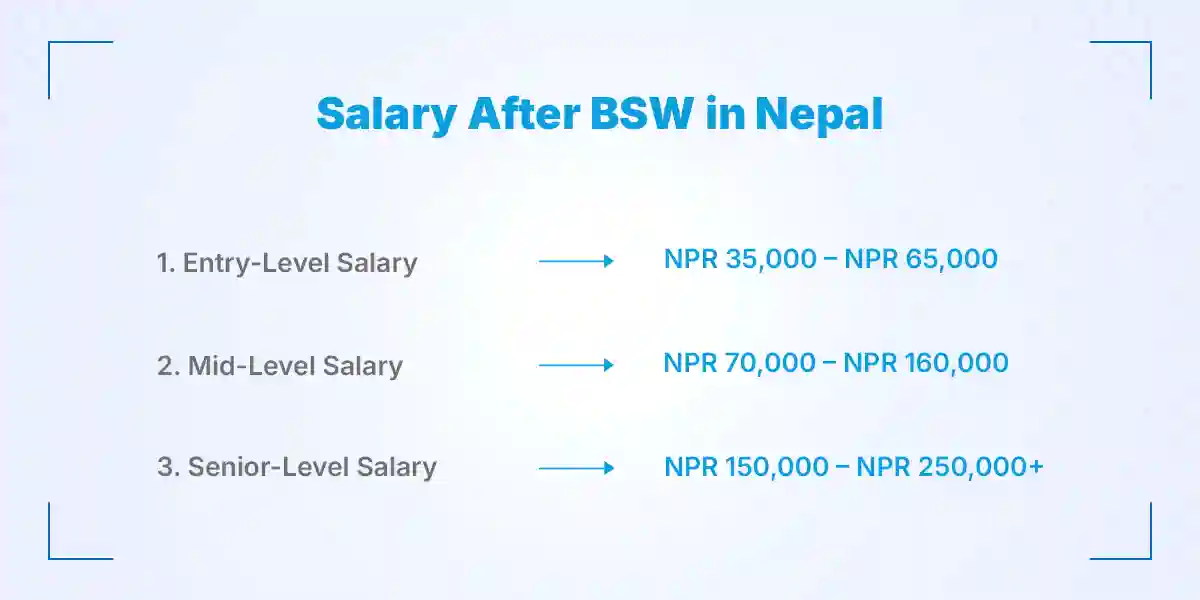
1. Entry-Level Salary
At the entry level, BSW graduates typically earn between NPR 20,000 and NPR 30,000 per month. These roles often include positions such as social worker, field officer, or community outreach assistant in NGOs and development organizations. Entry-level professionals mainly focus on fieldwork, data collection, and supporting community programs. The experience gained during this stage helps build practical skills and professional networks. Over time, these experiences open the door to better-paying roles and greater responsibilities.
2. Mid-Level Salary
With a few years of experience, BSW graduates can move into mid-level positions where salaries typically range between NPR 40,000 and NPR 75,000 per month. These roles may include project coordinators, program officers, or community development managers. Professionals at this level often handle project planning, team coordination, and monitoring development programs. Their responsibilities also include reporting progress to senior management and managing budgets or project timelines. Experience and leadership skills play an important role in reaching this level.
3. Senior-Level Salary
At the senior level, experienced social work professionals can earn NPR 80,000 to NPR 1,00,000 or more per month, especially in large NGOs, INGOs, or international development organizations. These professionals often work as program managers, development consultants, or project directors. Their responsibilities include overseeing large social projects, managing teams, and making strategic decisions. Senior professionals also collaborate with government bodies and international agencies. At this stage, their expertise and leadership significantly influence social development initiatives.
Skills Required to Succeed After BSW in Nepal
To build a successful career in social work, BSW graduates need more than just academic knowledge. The field often involves working directly with communities, understanding social issues, and managing development projects. This means professionals must develop strong communication, leadership, and analytical skills. Having the right combination of technical and interpersonal abilities helps social workers create a meaningful impact while advancing in their careers.
1. Communication and Interpersonal Skills
Communication and interpersonal skills are essential for social workers who interact with individuals, families, and communities every day. Professionals need to clearly explain programs, listen to community concerns, and build trust with people from different backgrounds. Strong communication also helps when coordinating with team members, organizations, and government officials. These skills allow social workers to effectively address social issues and provide meaningful support. Good communication often makes the difference between a successful project and one that struggles.
2. Counseling and Emotional Intelligence Skills
Social workers often deal with individuals facing emotional, social, or financial difficulties. Counseling and emotional intelligence skills help professionals understand people's feelings and respond with empathy and support. These skills allow social workers to guide individuals through difficult situations and help them find solutions. Emotional intelligence also improves conflict resolution and relationship-building within communities. In social work, the ability to genuinely understand and support others is incredibly valuable.
3. Research and Community Assessment Skills
Research and community assessment skills help social workers understand the real needs of communities before designing development programs. Professionals often conduct surveys, collect data, and analyze social conditions to identify key issues. This information helps organizations create more effective social programs. Strong research skills also support policy development and project evaluation. Evidence-based decision-making is an important part of modern social work.
4. Project Management and Leadership Skills
Many social work roles involve managing community projects and coordinating with different stakeholders. Project management and leadership skills help professionals organize activities, manage budgets, and guide teams toward achieving project goals. Social workers often lead awareness campaigns, training sessions, and community development initiatives. Effective leadership ensures that programs run smoothly and reach their intended outcomes. These skills become especially important as professionals move into senior roles.
5. Documentation and Reporting Skills
Social work professionals are often responsible for documenting project activities and preparing reports for organizations or donors. Documentation and reporting skills help ensure transparency and accountability in development programs. Accurate records of fieldwork, research findings, and program outcomes are essential for evaluating project success. These reports also help organizations secure future funding and improve program strategies. Strong documentation skills, therefore, play a critical role in professional social work practice.
Where Can BSW Graduates Work in Nepal?
BSW graduates in Nepal have the opportunity to work in a variety of sectors that focus on social welfare, development, and community support. Their training prepares them to address social issues and assist communities through structured programs and services. Many organizations in Nepal actively seek professionals with social work knowledge and field experience. From NGOs to government offices, the scope of workplaces for BSW graduates continues to grow as the demand for social development initiatives increases.
1. NGOs and INGOs in Nepal
NGOs and INGOs are among the largest employers of BSW graduates in Nepal. These organizations work on issues such as education, health, poverty reduction, gender equality, and child protection. Social workers in these organizations often participate in community programs, awareness campaigns, and development projects. They may work as field officers, project coordinators, or social workers supporting different initiatives. Working in NGOs and INGOs also allows professionals to gain practical field experience while contributing to meaningful social change.
2. Government Social Welfare Offices
BSW graduates can also work in government social welfare offices that manage public welfare programs and community development initiatives. These offices focus on improving social services, supporting vulnerable populations, and implementing government policies. Social work professionals may assist in planning and monitoring welfare programs at local or national levels. They often collaborate with community leaders and development agencies to address social challenges. Government roles can provide stable career opportunities while contributing to national social development.
3. Community Development Organizations
Community development organizations work directly with local communities to improve living standards and promote social progress. BSW graduates in these organizations often organize training programs, awareness campaigns, and community projects. Their work focuses on empowering communities through education, health initiatives, and social support programs. Social workers help communities identify challenges and develop practical solutions. This field allows professionals to build strong relationships with communities while creating lasting social impact.
4. Hospitals and Rehabilitation Centers
BSW graduates can also work in hospitals and rehabilitation centers where social support services are needed. In healthcare settings, social workers assist patients and families in coping with medical, emotional, and social challenges. They may help patients access resources, counseling services, and rehabilitation programs. Social workers often collaborate with doctors, nurses, and healthcare teams to improve patient well-being. This role highlights the important connection between social work and healthcare support.
5. Educational Institutions and Social Projects
Many educational institutions and social projects also employ BSW graduates to support student welfare and community engagement programs. Social workers in schools or educational organizations help address issues such as student counseling, community outreach, and awareness programs. They may also participate in social research and development initiatives related to education. Working in educational settings allows professionals to support both students and surrounding communities. It also provides opportunities to contribute to long-term social development through education.
Is BSW a Good Career Choice in Nepal?
Yes, BSW can be a good career choice in Nepal, especially for students interested in social development, community service, and humanitarian work. The demand for trained social workers has been gradually increasing as NGOs, INGOs, and government programs focus more on social welfare and community development. With the right skills and experience, BSW graduates can build meaningful and impactful careers.
Here are a few reasons why BSW can be a promising career path:
- Nepal has a growing number of NGOs and INGOs that regularly hire social work professionals.
- BSW graduates can work in community development, child protection, and public health programs.
- Opportunities exist in government welfare offices and social service organizations.
- The degree provides a foundation for higher studies, such as MSW or public health programs.
- Social workers play an important role in supporting communities and promoting social change.
How to Build a Successful Career After BSW in Nepal?
Building a successful career after BSW in Nepal requires a combination of higher education, practical experience, and strong professional skills. While the degree provides a strong foundation in social work principles, career growth often depends on continuous learning and real-world exposure. Many graduates strengthen their profiles by pursuing advanced studies, preparing for government jobs, or gaining field experience through internships. Developing specialized skills can also help social workers take on leadership roles in development projects.
1. Pursuing Master’s Degree in Social Work (MSW)
One of the most effective ways to advance a career in social work is by pursuing a Master’s Degree in Social Work (MSW). This program helps graduates develop deeper knowledge of social policies, counseling methods, and community development strategies. An MSW degree can open doors to higher-level roles such as program manager, policy advisor, or development consultant. It also allows professionals to specialize in areas like child welfare, public health, or human rights. Higher education often leads to better career opportunities and leadership positions in the social sector.
2. Preparing for Lok Sewa and Government Social Services Jobs
BSW graduates can also build a stable career by preparing for Lok Sewa (Public Service Commission) examinations. Apply of Loksewa is a common step for graduates who want to enter government service. Government jobs in social services, community development, and welfare departments offer long-term career stability. These roles allow professionals to contribute directly to national development programs and social welfare initiatives. Preparing for Lok Sewa exams requires dedication and a strong understanding of public administration and social policies. Many social work graduates choose this path to serve communities through government institutions.
3. Gaining Field Experience Through Internships and Volunteer Work
Field experience is extremely important for anyone pursuing a career in social work. Internships and volunteer work allow graduates to understand real community challenges and gain practical skills. Working with NGOs or community organizations helps students develop confidence in handling social issues. These experiences also help build professional networks and improve employment opportunities. Many organizations prefer candidates who already have hands-on experience in social development projects.
4. Developing Professional Skills in Counseling and Community Work
Developing strong professional skills is essential for long-term success in social work. Skills such as counseling, community engagement, conflict resolution, and leadership help social workers handle complex social situations. Continuous learning through workshops, training programs, and certifications can further strengthen these abilities. These skills also help professionals work effectively with communities, organizations, and government agencies. Over time, well-developed professional skills can lead to leadership roles in development projects and social programs.
Where to look for Job after BSW?
You can look for a job after BSW on job portals like Kumari Job and professional platforms like LinkedIn, where many organizations regularly post vacancies related to social work and development sectors. These platforms make it easier for graduates to find opportunities in NGOs, INGOs, and community development projects. Many employers also use these online channels to recruit candidates with social work backgrounds. Staying active on these platforms can help graduates discover new opportunities and connect with potential employers.
1. Job Portals
Job portals such as Kumari Job are one of the most effective places for BSW graduates to search for employment opportunities. These platforms regularly publish vacancies from NGOs, INGOs, development organizations, and social service institutions. Graduates can easily filter jobs based on location, experience level, and sector. Creating a professional profile and uploading an updated CV increases the chances of being noticed by recruiters. Regularly checking job portals also helps candidates stay updated about new opportunities in the social work field.
2. LinkedIn
LinkedIn is a professional networking platform that allows BSW graduates to connect with employers, development professionals, and organizations. Many NGOs and development agencies post job openings directly on LinkedIn. By building a strong professional profile, graduates can showcase their education, internships, and social work experience. LinkedIn also allows users to follow organizations and stay informed about career opportunities. Networking through this platform can often lead to valuable job leads and collaborations.
3. Social Media Groups
Various social media groups focused on NGOs, development work, and social services also share job opportunities for social work graduates. These groups often post updates about vacancies, volunteer opportunities, and community projects. Being active in these groups helps graduates stay informed about openings that may not always appear on formal job portals. It also allows professionals to connect with others working in the same field. Networking within these communities can sometimes lead to unexpected career opportunities.
4. NGO and INGO Career Pages
Many NGOs and INGOs publish job openings directly on their official career pages. These pages provide detailed information about available positions, job responsibilities, and application procedures. BSW graduates who are interested in working with specific organizations can regularly check these pages for new opportunities. Applying directly through the organization’s website can also increase the chances of getting noticed. This approach is especially useful for those who already know which organizations they want to work with.
Conclusion
BSW scope in Nepal is gradually expanding as the country continues to focus on social welfare, community development, and public health initiatives. A Bachelor of Social Work not only prepares students to understand complex social issues but also equips them with the skills needed to support individuals and communities. From NGOs and INGOs to government welfare programs and healthcare institutions, BSW graduates have the opportunity to contribute meaningfully to society while building a stable career.
With the right combination of education, practical experience, and professional skills, BSW graduates can grow into impactful roles within the social development sector. Pursuing higher studies, gaining field experience, and developing counseling or leadership skills can further strengthen career prospects. For students who are passionate about helping communities and creating positive social change, a BSW degree can be both a fulfilling and promising career path in Nepal.
Frequently Asked Questions
Submit your comments

Get Our App On



How to Register a Personal PAN Card in Nepal: Online & Offline Methods
VIEW DETAILS
What Is the Average JavaScript Developer Salary in Nepal?
VIEW DETAILS
Salary Tax Slab 2083/84 in Nepal: Latest Tax Rates & Calculation
VIEW DETAILS
What Is the Average Java Developer Salary in Nepal?
VIEW DETAILS


Loading Comments...